
Welcome to the blog!
Scroll down for the latest and greatest, filter by category, check out the most popular tutorials, or search for what you want to learn below!
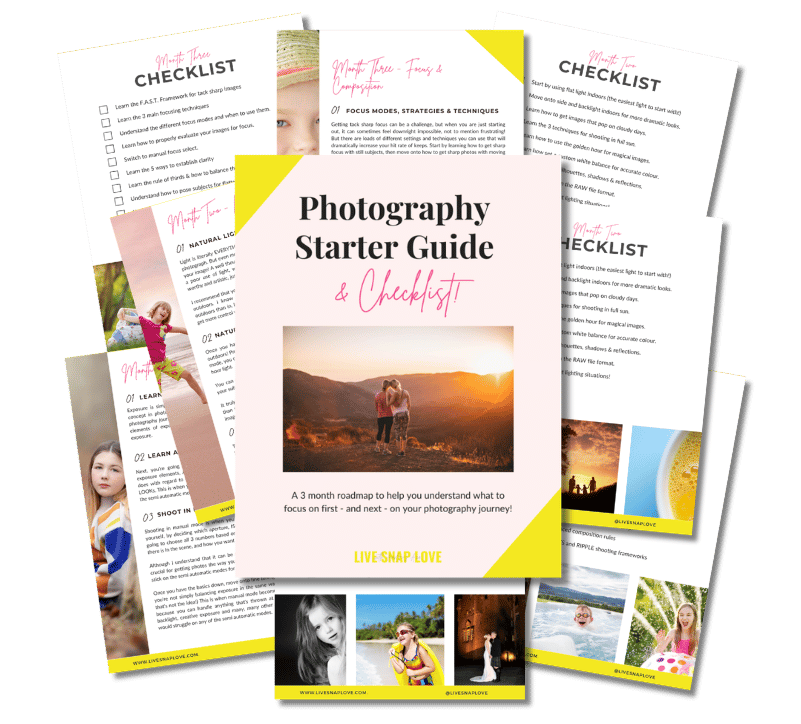
Want to learn photography but have no clue where to begin and what to learn next??!
Steal my Photography Learning Blueprint and get the clarity, checklist and step by step game plan to help you get photos you love - quickly!

How to Use a Gray Card
I've spoken before about using a grey card to either set your white balance or exposure, and today I thought I'd go one step further and explain the steps you take to do that! First off, a gray card is just a piece of card that represents 18% gray - in other words the middle gray that your camera tries to expose for (See this post on understanding your light meter for more information on that) Before I got my Expodisc, I used this one - CPM Delta 1 8 inch x 10 inch Gray Card which costs around $10 - but you can get lots of different ones which are pretty inexpensive. (I don't have it but this Pocket-sized one looks good for being a bit more portable). It doesn't really matter which one you choose, as long as they are non-reflective.

10 Tips for a Portrait Close Up
I love a simple classic portrait shot from time to time - having your subjects face as the centre of attention allows to really concentrate on their features and expressions, and can feel much more intimate than other portrait types.
And since it's been a while since I've done one, here's a classic "10 tips" post on them for you!

How Your Camera's Light Meter Works
When you are shooting in Manual Mode (or any other mode for that matter) you are probably using your camera's in-built light meter to "read" the light available in the scene and tell you when you have reached the correct exposure. When the little bar on your meter is at 0, that is your camera telling you that your image will be correctly exposed....in theory at least. However, sometimes, our camera's light meter can get it wrong. Here's why, and how to deal with it:

How To Get Perfect Exposure Using Spot Metering and the Zone System
Having problems getting your exposure spot on? Then I have got the tutorial for you! We are going take a look at how we can combine the awesomeness of spot metering, with the simplicity of something called the Zone System. This system was developed by a very famous black and white film photographer called Ansel Adams, who devised it as a way of determining the perfect exposure in camera for any given scene. Although this was created for black and white film users, we can steal it for use in color and digital photography too!
Enough history: Let's get crackin' with the tutorial!

5 Camera Options for Underwater Photography
It started innocently enough - a quick visit to Amazon to purchase a disposable waterproof camera to get some underwater shots. Four hour later, I had somehow managed to develop an underwater camera obsession, and could even be seen eyeing up Ikelite Housing for my DSLR at a whopping $1,700. I have looked at everything from disposables to "rugged" cameras to underwater housings, so I thought I'd put all that recently gained knowledge to good use and list some of the options that are available to you if you fancy taking some underwater pictures yourself.....

Guide to Fixing White Balance in Editing
In both Photoshop / Elements and Lightroom, it is very easy to fix your white balance in post processing - particularly when you have a neutral tone in your image. Checking and fixing your white balance should be the first thing you do in editing to an image, so here’s how to do it.
Please note that the screen shots are from ACR - the free plug in for Photoshop and Photoshop Elements (If you don’t yet have this plug-in for any reason, go get it now- makes life much easier) but it's the same process when using Lightroom.




Check Out These Reader Favourites



It's been quite a few years now since I made the switch from Aperture Priority Mode to shooting in Manual Mode, and it was one of the BEST things I ever did to improve my photography skills.
It was like a whole new world opened up to me, and I started TRULY understanding exposure, and in turn, getting the images that I wanted.
Of course, there was a lot to learn, and there are some things I wish I had known before I started!
So, here are 10 things about shooting in Manual Mode that you might just wish you knew…