
Welcome to the blog!
Scroll down for the latest and greatest, filter by category, check out the most popular tutorials, or search for what you want to learn below!
Want to learn photography but have no clue where to begin and what to learn next??!
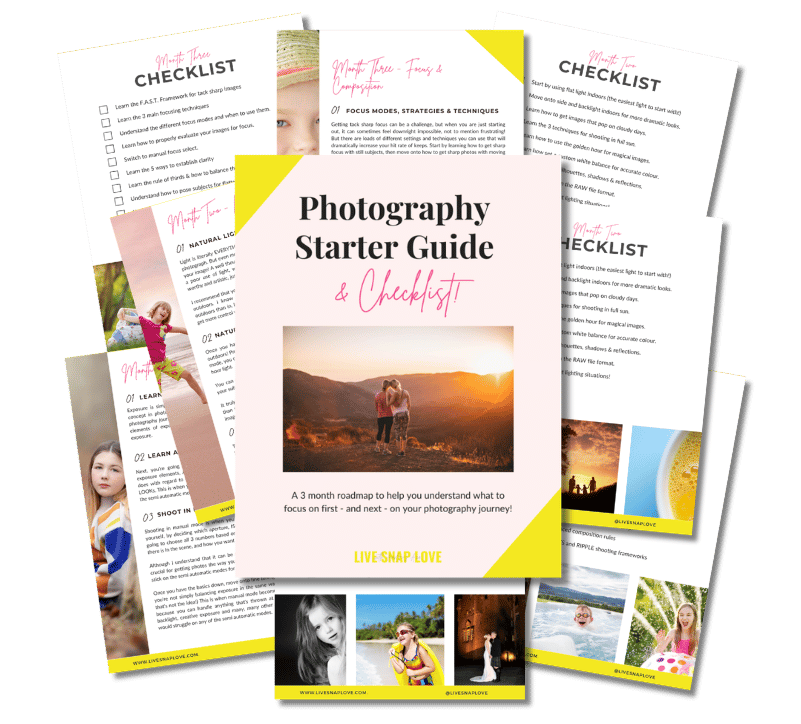
Steal my Photography Learning Blueprint and get the clarity, checklist and step by step game plan to help you get photos you love - quickly!

10 Tips for a Portrait Close Up
I love a simple classic portrait shot from time to time - having your subjects face as the centre of attention allows to really concentrate on their features and expressions, and can feel much more intimate than other portrait types.
And since it's been a while since I've done one, here's a classic "10 tips" post on them for you!

How Your Camera's Light Meter Works
When you are shooting in Manual Mode (or any other mode for that matter) you are probably using your camera's in-built light meter to "read" the light available in the scene and tell you when you have reached the correct exposure. When the little bar on your meter is at 0, that is your camera telling you that your image will be correctly exposed....in theory at least. However, sometimes, our camera's light meter can get it wrong. Here's why, and how to deal with it:

How To Get Perfect Exposure Using Spot Metering and the Zone System
Having problems getting your exposure spot on? Then I have got the tutorial for you! We are going take a look at how we can combine the awesomeness of spot metering, with the simplicity of something called the Zone System. This system was developed by a very famous black and white film photographer called Ansel Adams, who devised it as a way of determining the perfect exposure in camera for any given scene. Although this was created for black and white film users, we can steal it for use in color and digital photography too!
Enough history: Let's get crackin' with the tutorial!

Fake a Black Background: Introducing the Inverse Square Law
This is guest post from a couple of years ago that i've moved over from the old blog - so if you are are a long-time follower you may have read this before but it was such a good tutorial I had to share it again! If you have ever wondered how you can get a black background without a backdrop (or just need reminding!), then this is the post for you. Over to my good friend and wonderful photographer, Jan, to share how this is done....
First of all, thank you Audrey for having me back. Don’t you all just love Audrey’s blog? I think she can explain things more precisely than anyone else out there. She’s amazing!

10 Ways to Improve your Photography This Weekend
No matter where we are in our photography journey, I'm willing to bet that there are always to improve what we do or how we do it. Although everyone reading this will be at different stages along the road, and even on different paths, I hope that reading this post gives you some ideas of the areas you can work on this weekend regardless of where you are or what you do...

Photography Composition: Using the Rule of Thirds
The rule of thirds is one of the most basic principles of composition in photography, and one you will use all the time going forward! Here's how to do it:
What you need to do is imagine that your photograph is divided into nine equal sections by two horizontal and two vertical lines (as shown below) Apparently, when we look at something, our eyes are naturally drawn to the points where these lines intersect. Placing a point of interest on one of these intersections, or placing elements along one of the lines, gives the photo more balance and is more appealing to the viewer.





Check Out These Reader Favourites



It's been quite a few years now since I made the switch from Aperture Priority Mode to shooting in Manual Mode, and it was one of the BEST things I ever did to improve my photography skills.
It was like a whole new world opened up to me, and I started TRULY understanding exposure, and in turn, getting the images that I wanted.
Of course, there was a lot to learn, and there are some things I wish I had known before I started!
So, here are 10 things about shooting in Manual Mode that you might just wish you knew…