
Welcome to the blog!
Scroll down for the latest and greatest, filter by category, check out the most popular tutorials, or search for what you want to learn below!
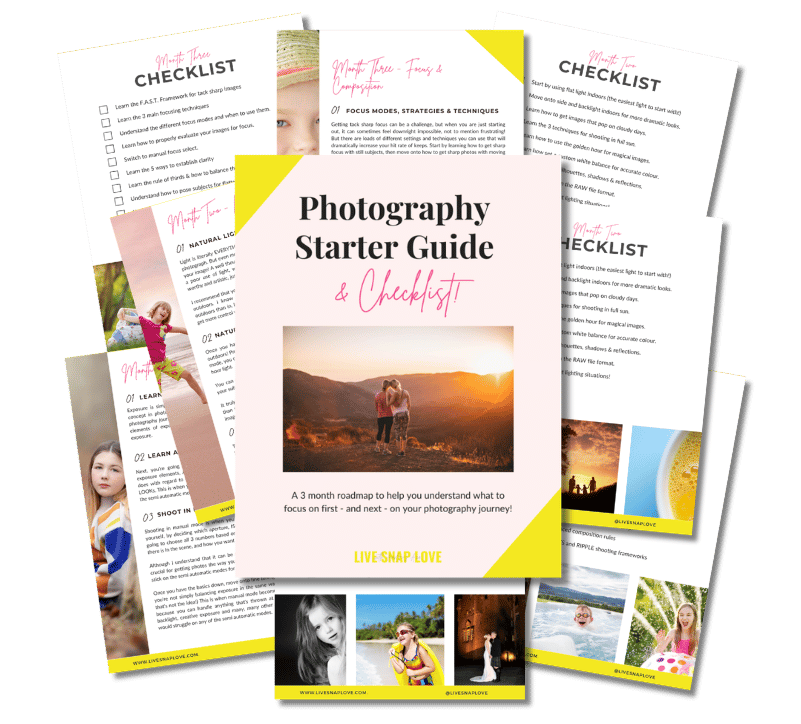
Want to learn photography but have no clue where to begin and what to learn next??!
Steal my Photography Learning Blueprint and get the clarity, checklist and step by step game plan to help you get photos you love - quickly!

How to Stop Getting Flustered Whilst Photographing People
Did you recently start to take photos of people OTHER than your family? Yes? Then, let me guess how you felt.....
You found yourself getting more and more flustered, unsure of what you should be doing next, worrying that you haven't got any good shots and feeling like you really needed to hurry things along because you were really taking too long getting your settings right.
Did that sound at all familiar? I bet it did! Most people when starting out have those exact same feelings: like we are being judged by how long we take, and not knowing how to make the session flow, or feel confident throughout.
So, in today's post, I am going to do my darn best to make sure that you feel calm and in control during your next photography session.
Let's get going shall we? Read on!

Photography Case Study: Monica Dominguez Carlson
I have another photography case study for you today: the ultra talented Monica Dominguez Carlson. Monica is another long time reader of the blog, and I so delighted to have her here, because she is a wonderful photographer who has come so far. I started doing these case studies a few months as a way to show you the different journeys people take to get to where they are, and to shed some light on the ways you can grow your photography skills too! Hope you enjoy them.......Audrey x

5 Ways to Level Up Your Skills This Year
Let's get 2017 off to a kickin' start shall we?!
I don't know about you but I always think that the start of a New Year is a great time to focus on the year ahead, and what we want to achieve.
If getting better at photography is on YOUR list of things to do this year, then check out these 5 ways to level up your photography skills this year!

How to Make Time for Learning Photography
A few days ago I asked a question in my Facebook group about what was the number one thing that was holding them back from learning photography. Several of the answers that came up said an issue was they simply did not have enough time.
Now, that is something I can totally relate to!
Time is definitely my most precious commodity these days, so I have to try to work smarter in the hours that I've got. I can't add any more hours into the day (although that would be nice!) - all I can do is make sure that I am being productive in the hours that I do have, and that I using the time to get the things that matter most done.
That's what I am going to at least attempt to help you with today - make more time for learning photography, and how to work smarter with the limited time that you do have.

A 10 Minute Aperture Exercise
It can be hard sometimes to make enough time for ourselves in our daily life to improve our photography skills, but one of THE best things you can do is simply practice - getting into the habit of picking up your camera every day for even just ten minutes can have an big affect on how well you understand a particular concept, or just building in some muscle memory so you start to instinctively know where all your buttons and dials are on your camera. No more fumbling around for you!
With this in mind, I'm sharing an exercise today for beginners that will help you understand the affect aperture and depth of field has on your images, but one that will take you just ten minutes to complete. Short, sweet and straight to the point :)

8 "Micro" Investments you can make for growing your photography skills (From $0 - $100)
Making an investment in yourself and your photography skills can be a key element in how successful you will be in reaching your goal of becoming a photographer. You don't even have to spend a fortune: even tiny little baby micro-investments can give you a big return, either on helping you progress your skills, or just by saving you time and headaches whilst you are learning - and beyond!
Investments in learning can be anything from a small piece of photography equipment, to getting paid software instead of relying on the free stuff, or even taking a course to improve your skills. I do appreciate that for many of us, photography is a hobby so there is not a lot of extra cash to throw down (nor can you write it off as expenses - boo!) but even if you only have a teeny tiny bit of cash to invest in yourself (or even not a bean) read on.....




Check Out These Reader Favourites


It's been quite a few years now since I made the switch from Aperture Priority Mode to shooting in Manual Mode, and it was one of the BEST things I ever did to improve my photography skills.
It was like a whole new world opened up to me, and I started TRULY understanding exposure, and in turn, getting the images that I wanted.
Of course, there was a lot to learn, and there are some things I wish I had known before I started!
So, here are 10 things about shooting in Manual Mode that you might just wish you knew…